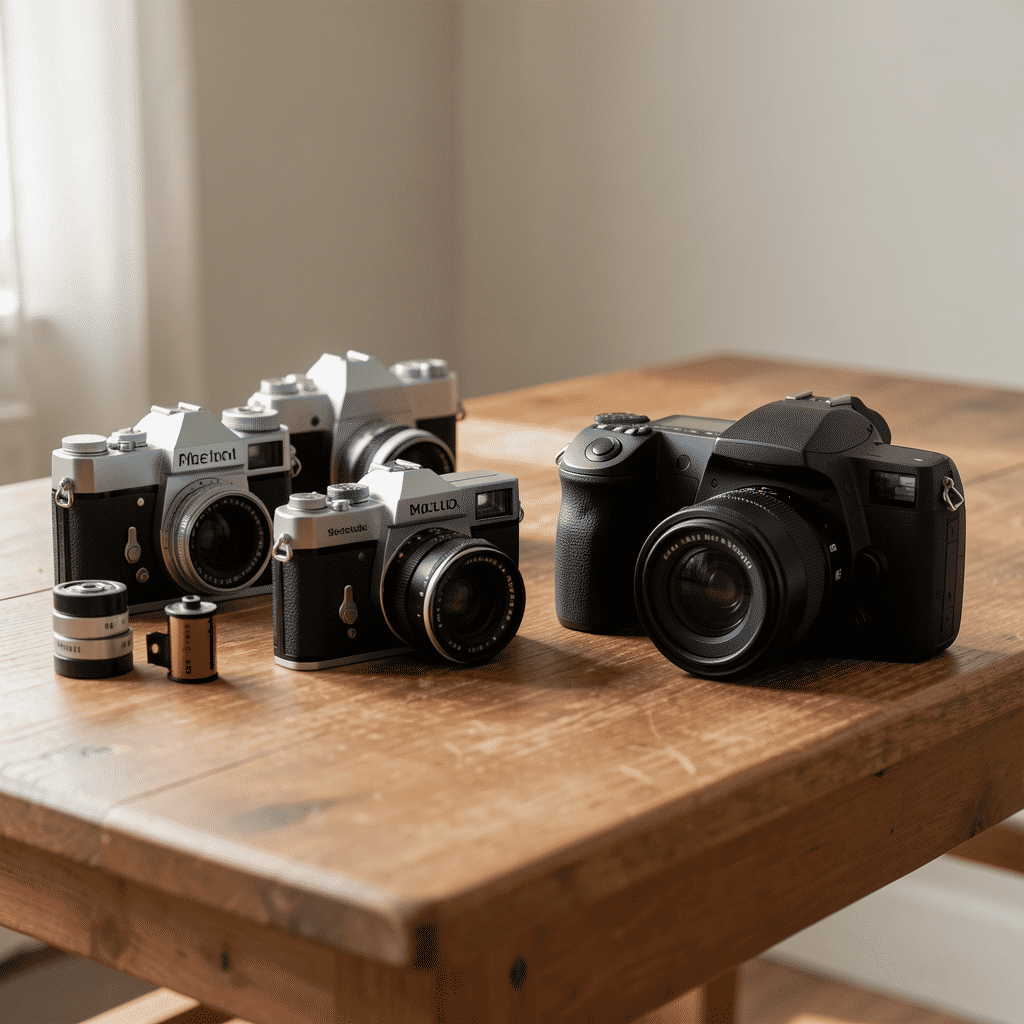
In the evolving world of visual arts, the choice between digital and film photography remains a vibrant topic of discussion. Each medium offers its own set of characteristics, influencing aesthetics, technique, and the overall experience. Deciding which medium suits your creative journey hinges on understanding these differences and aligning them with your personal style.
Understanding Film Photography
Film photography is cherished for its nostalgia, capturing images with a characteristic grain and color profile that digital often seeks to mimic. The process involves chemical reactions on film rolls, offering a tactile experience from loading the camera to developing the photos.
Film demands a thoughtful and intentional approach as each click consumes a frame. This can cultivate patience and discipline as photographers are encouraged to make deliberate choices regarding composition, exposure, and focus. The anticipation of seeing how the images develop is a delightful uncertainty that many find rewarding.
Examining Digital Photography
Digital photography leverages modern technology, providing convenience and immediacy. Images are captured on electronic sensors, making them instantly viewable. This real-time feedback allows photographers to make adjustments on the fly, offering greater experimentation and learning opportunities.
The flexibility of digital allows for virtually limitless captures, conducive to continuous practice. Modern editing software provides extensive possibilities for post-processing, allowing photographers to refine their vision in detail. Additionally, digital encourages sharing through digital platforms, fostering wider and more immediate visibility.
Choosing the Right Medium for Your Style
When choosing between digital and film, consider what resonates with your artistic goals and workflow preferences:
-
Aesthetic Preference: If you cherish the organic and often unpredictable texture of film, its hues, and its unique contrasts, film might be your calling. If precision, clarity, and versatility in editing are paramount, digital could be a better fit.
-
Process Enjoyment: Film aficionados often revel in the analog process, appreciating the ritual from shooting to developing. Digital photographers may relish the instant gratification and adaptability offered by this medium.
-
Practical Considerations: Think about the logistics of each medium. Film requires access to developing facilities or a home setup for processing. Conversely, digital needs storage solutions and often involves investments in good editing software.
-
Project Goals: Reflect on the specific needs of your projects. If a project demands rapid turnaround or high-volume output, digital is the practical choice. For projects where the journey and method are as vital as the final work, film can offer a richer experience.
Ultimately, the choice between digital or film is deeply personal and can even evolve over time. Some photographers enjoy merging both, enriching their creativity through diverse approaches. Whether you're drawn to the timeless charm of film or the innovative edge of digital, what matters most is how the medium complements and enhances your artistic expression.