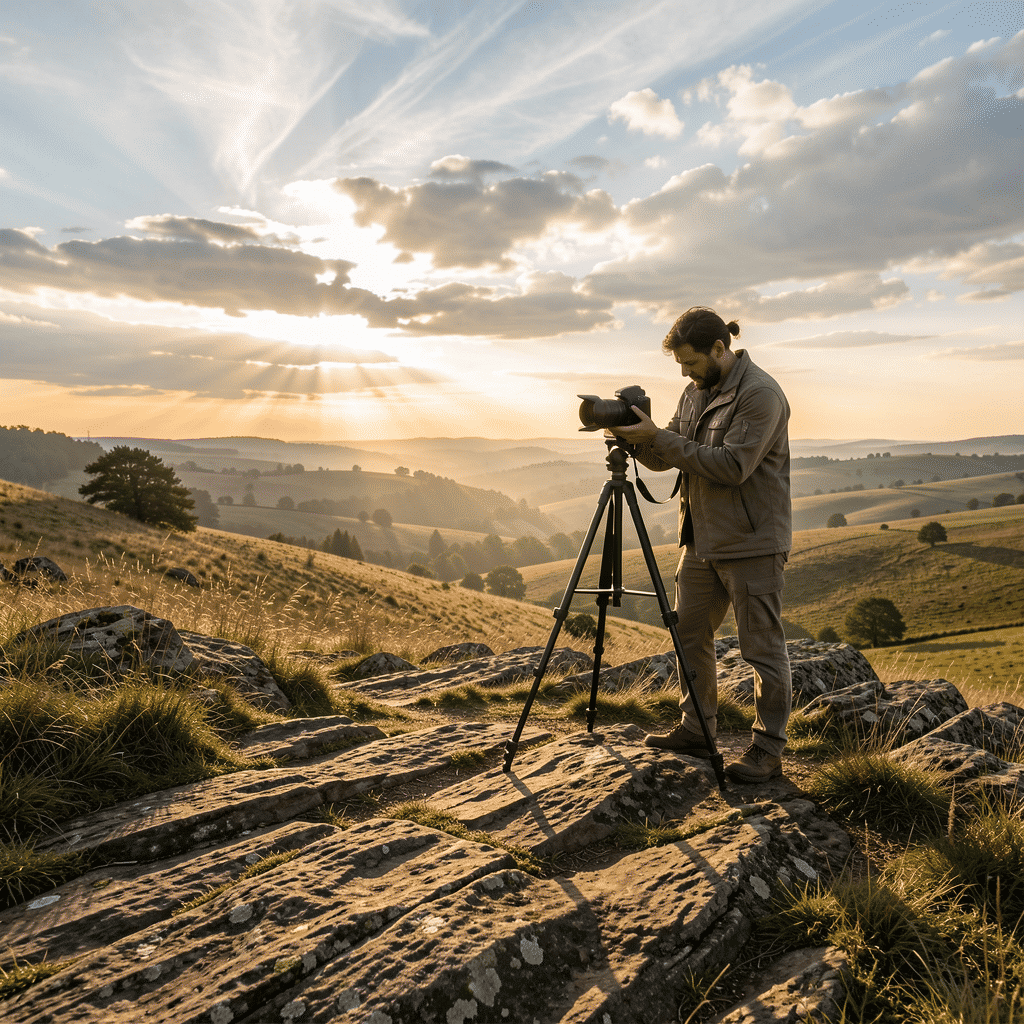
Improving one's photographic proficiency involves mastering an array of techniques to enhance the quality and expression of captured images. At the heart of these techniques are angle, exposure, and lighting, which play critical roles in transforming ordinary shots into captivating visual stories.
Understanding the Power of Angle
The angle at which a photograph is taken can greatly affect the viewer's perception and emotional response. By experimenting with various perspectives, photographers can add dynamic interest to their images. Bird's eye view or high-angle shots can provide a more comprehensive understanding of a scene, offering a sense of detachment or dominance. In contrast, low-angle perspectives tend to make subjects appear larger than life, evoking feelings of power or importance. A straight-on shot offers a neutral perspective, often used in portraits to create a connection between the subject and the viewer.
The Art of Exposure
Exposure refers to the amount of light that reaches the camera sensor, influencing the brightness and contrast of an image. Mastering exposure requires a delicate balance of aperture, shutter speed, and ISO settings. The aperture affects the depth of field – a wide aperture results in a shallow depth of field, perfect for isolating a subject against a blurred background, while a narrow aperture keeps everything in focus, ideal for landscape photography. Shutter speed can freeze motion or create stunning motion blur effects, depending on how fast or slow it is set. Lastly, adjusting the ISO setting allows for shooting in varying light conditions; lower ISO values are suitable for well-lit environments, while higher ISO values help in darker settings, albeit at the risk of introducing noise into the image.
Harnessing the Magic of Lighting
Lighting is perhaps one of the most vital elements in photography, as it can dramatically alter the mood, tone, and clarity of an image. Natural lighting, when harnessed effectively, can produce stunning results. Golden hour, the period shortly after sunrise or before sunset, casts a warm glow and softens shadows, creating a flattering effect for portraits and landscapes alike. On the other hand, the diffused light of an overcast day reduces harsh shadows, making it ideal for evenly lit images.
Artificial lighting, too, offers creative possibilities. Studio lighting setups allow control over the intensity and direction of light, making it possible to manipulate shadows and highlights for desired effects. Utilizing reflectors and diffusers can further optimize the quality of light, ensuring subjects are illuminated in the most appealing way.
Conclusion
In the quest to enhance photographic skills, continuous practice and experimentation with angles, exposure, and lighting are essential. Each photograph is an opportunity to apply these techniques creatively, transforming a simple image into a compelling narrative. By understanding and mastering these critical aspects, photographers can elevate their work, capturing not just images, but moments that resonate and inspire.